Characteristics
- INCI
- Ascorbyl Glucoside
- Ru.
- Form of Vitamin C
- CAS
-
129499-78-1
This is the substance number in the Chemical Abstracts Service registry. The CAS number uniquely identifies a substance regardless of language, trade name, or synonyms.
- EC
-
425-980-0
This is the substance number in the European chemical identification system (EC number), used in European regulatory databases including ECHA/CosIng.
- IUPAC
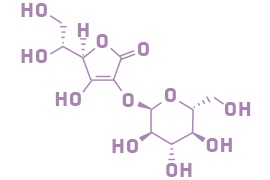
- 2-O-Alpha-D-Glucopyranosyl-L-Ascorbic Acid
- Functions
- antioxidant
Who it's for
Description
If pure vitamin C is the dramatic diva of skincare, ascorbyl glucoside is the calmer, more reliable cousin who actually shows up on time and gets the job done. It’s a vitamin C derivative, which means it was created to keep some of vitamin C’s good stuff while being far more stable and much easier for formulators to work with. That’s why you’ll often see it in a vitamin C serum, a solution, or a lightweight treatment marketed as an ascorbyl glucoside 12 formula, especially from brands like The Ordinary.
So what are the benefits of ascorbyl glucoside for skin? In lab studies, it behaves like a decent little vitamin C stand-in: it has antioxidant activity, can help with collagen-related support, and may help fade uneven pigmentation over time. The catch is that most of the exciting data is still in vitro, meaning it’s from lab experiments rather than big human trials. Some studies suggest the skin can convert it into active vitamin C after penetration, but the exact efficiency is still a bit of a mystery. In other words, when people ask ascorbyl glucoside vs ascorbic acid, the answer is not “better,” but more “easier to formulate, gentler, and potentially less potent.”
That’s why the best ascorbyl glucoside product for you depends on what you want. If your skin hates the sting of plain vitamin C, ascorbyl glucoside solution 12 can be a nice compromise. The ordinary ascorbyl glucoside solution 12 is often searched for because it’s a simple way to try this derivative without a whole skincare parade. The benefits of the ordinary ascorbyl glucoside solution 12 are mainly its stability and its potential for brightening and antioxidant support, though it’s not as heavily proven as good old ascorbic acid. If you’re wondering how to use ordinary ascorbyl glucoside or how to use ascorbyl glucoside solution 12, the short answer is the same as with most serums: apply it after cleansing and before heavier creams, usually once daily at first, and see how your skin behaves. If your skin is happy, you can use it more regularly. Patience is the name of the game here.
As for how to apply ascorbyl glucoside, think thin layer, gentle hands, and consistent use rather than heroic overapplication. And if you’re hunting for how often to use ascorbyl glucoside, a daily ascorbyl glucoside serum is common, but sensitive skin may prefer every other day to start. So yes, ascorbyl glucoside for skin is a pretty smart pick if you want a vitamin C-ish ingredient that is stable, generally well tolerated, and has some promising science behind it. Just keep your expectations realistic: it’s a promising understudy, not a guaranteed star taking over for vitamin C.
More detail
A form of skincare superstar, vitamin C. If you do not know why vitamin C is such a big deal in skincare, we have a really detailed, geeky description that's good to read. :)
So now you know that because pure vitamin C is such a diva (very unstable and hard to formulate) the cosmetic industry is trying to come up with some derivatives that have the badass anti-aging properties of vitamin C (antioxidant protection + collagen boosting + fading hyperpigmentation) but without the disadvantages. This is a hard task, and there is not yet a derivative that is really proven to be better in every aspect, but Ascorbyl Glucoside is one of the best options when it comes to vitamin C derivatives. Let's see why:
First, it's really stable and easy to formulate, so the problems that come with pure vitamin C are solved here.
Second, in vitro (meaning made in the lab, not on real humans) studies show that ascorbyl glucosidecan penetrate the skin. This is kind of important for an anti-aging ingredient to do the job, so this is good news, though in-vivo (made on real humans) studies are still needed.
Third, in-vitro studies show that after ascorbyl glucoside is absorbed into the skin it is converted to pure vitamin C (though the rate of conversion is still a question mark). It also shows all the three anti-aging benefits (antioxidant protection + collagen boosting + fading hyperpigmentation) that pure vitamin C does.
Bottom line: ascorbyl glucoside is one of the best and most promising vitamin C derivatives that shows similar benefits to that of pure vitamin C, but it's less proven (in vivo vs. in vitro studies) and the extent of the benefits are also not the same.
Evidence & Research on Ascorbyl Glucoside
-
1
Journal of Cosmetic Dermatology, Volume 11 (4) – Dec 1, 2012, Stability, transdermal penetration, and cutaneous effects of ascorbic acid and its derivatives
Products with Ascorbyl Glucoside (2 985 total)
Most often found in Garnier products (152 items)


