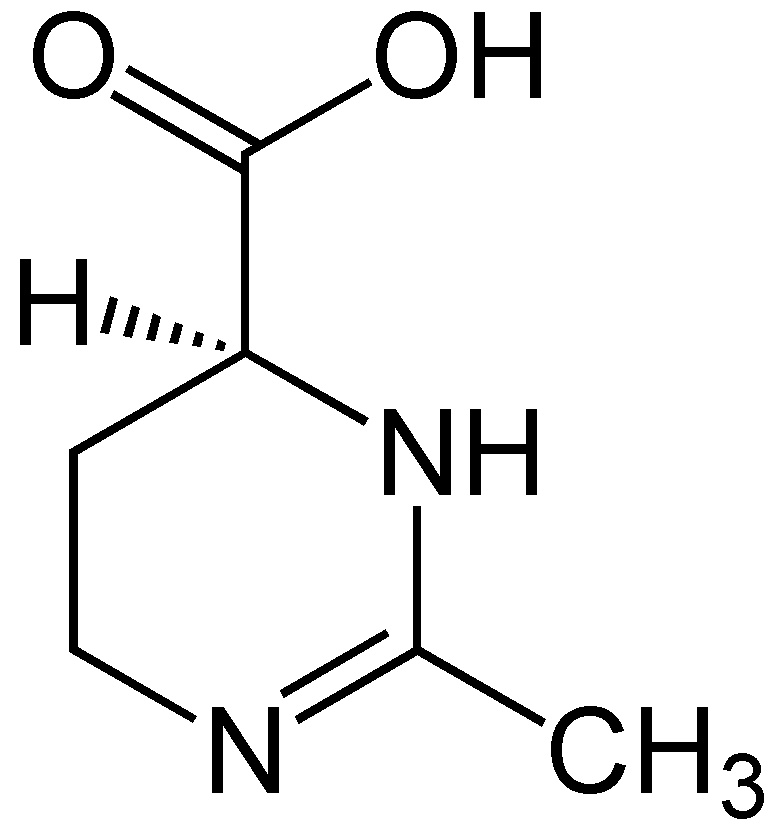
Characteristics
- INCI
- Ectoin
- CAS
-
96702-03-3
This is the substance number in the Chemical Abstracts Service registry. The CAS number uniquely identifies a substance regardless of language, trade name, or synonyms.
- IUPAC
- 4-Pyrimidinecarboxylic Acid, 1,4,5,6,-Tetrahydro-2-Methyl-, (4S)-
- Functions
- skin conditioning
Who it's for
Description
Some ingredients are all about flashy claims, but ectoin is more of a quiet overachiever: it helps your skin deal with stress, stay hydrated, and behave a little better when life gets annoying. It belongs to the family of “extremolytes,” tiny molecules made by microorganisms that survive in harsh places like salt lakes and deserts. In skincare, that stress-protection trick translates into hydration, soothing, barrier support, and some seriously good environmental defense.
The mechanism is delightfully nerdy. Ectoin binds water and helps build a protective hydration shell around cells and proteins, so your skin’s important structures are less likely to freak out under UV, pollution, or irritation. In a 4-week placebo-controlled study with 10 people, a 0.5% ectoin treatment in the crow’s feet area reduced wrinkle depth by 19% on average. Another double-blind study with 24 participants found that a 2% ectoin cream used twice daily for 4 weeks improved wrinkle volume, roughness, scaling, and elasticity. So if you’re hunting for the best ectoin serum or the best ectoin cream for wrinkles, this is the kind of data that makes the ingredient worth a closer look.
Ectoin is also a nice sidekick for irritated or sensitive skin. In one study with 20 people, a 1% ectoin cream performed similarly to 0.25% hydrocortisone on surfactant-irritated skin when it came to reducing redness. Another study with 23 women with sensitive skin found that a 1% ectoin cream improved tolerance to retinol, which is why you sometimes see it paired with other “power” actives like niacinamide in barrier-friendly products. That combo can be especially handy in an ectoin hydro barrier serum or a moisturizer when your skin is acting a bit dramatic.
And yes, ectoin shows up outside face creams too. It’s used in ectoin eye drops for dryness and irritation, and in some nasal sprays for helping calm and moisturize irritated nasal tissue. For skincare, the best ectoin products are usually the ones that keep things simple: a serum, cream, or moisturizer with a meaningful concentration and a formula suited to your skin type. Reddit can be useful for crowdsourced finds, but the best ectoin skincare products in 2025 are still the ones backed by a real formula, not just hype. One last note: you may also see ectoine as the same ingredient name in some materials. Different spelling, same little water-loving stress shield.
More detail
Ectoin is a surprisingly well-researched, multi-functional active that can do from pollution & light protection to skin hydration, soothing, and barrier repair, several things to your skin.
It is an extremolyte, a small stress-protection molecule that protects microorganisms living under extreme conditions such as salt lakes, hot springs, arctic ice, the deep sea, or deserts. It was discovered in 1985 in a microorganism living in a salt lake in the Egyptian desert.
The key skill of Ectoin is protection that applies also to the skin. Its main mode of action is binding water molecules (aka kosmotropic) and creating hydro complexes. These complexes then surround important biomolecules (e.g. cells, proteins, enzymes) and form a stabilizing hydration shell around them.
This protection mechanism means good things when it comes to our skin: Ectoin has antioxidant, anti-inflammatory, pollution& light protecting, skin hydrating, barrier repairing as well as anti-aging properties.
A placebo-controlled 10-person study examined a four-week treatment with 0.5% Ectoin in the crow's feet area and found a significant anti-wrinkle effect (-19% mean wrinkle depth) in 100% of the participants. Another double-blind, placebo-controlled clinical study with 24 participants used a 2% Ectoin cream twice a day for 4 weeks and found an improvement in all of the measured parameters, such as wrinkle volume, skin scaling, roughness, and elasticity.
Another remarkable property of Ectoin is protecting the epidermal immune cells called Langerhans cells from UV damage. 0.3% and 0.5% Ectoin cream was used twice a day for 14 days on the forearm and then irradiated with 1.5 MED UV (one and a half times the UV dose that causes detectable redness). While the untreated, UV-stressed area showed a 40% decrease in viable Langerhans cells, 0.5% Ectoin showed 100% protection (and 0.3% showed ~95% protection).
The soothing efficacy is also backed up by multiple in-vivo studies. A 20-person study compared 1% Ectoin cream to 0.25% hydrocortisone treatment on surfactant irritated skin and found similar effectiveness in reducing skin redness. Another study with 23 females with sensitive skin found that a 1% Ectoin cream helped to tolerate a 0.5% or 1% retinol treatment much better.
A tiny, 5-person study examined the long-term (7 days) skin hydration effect of 1% Ectoin. During the study, hydration levels increased up to 200% compared to placebo, and even 7 days after stopping the treatment hydration status was largely preserved. Higher concentration (5-7%) Ectoin treatments are also used as OTC medical products for the treatment of eczema or atopic skin.
The anti-pollution magic properties are also well-established and Ectoin is currently the only anti-pollution active ingredient approved for use in medical products (e.g. inhalation solutions) in Europe. Clinical studies showed a reduction of inflammations in human lungs of patients with COPD (a pulmonary disease) and pollution-induced asthma. But coming back to the skin, Ectoin protects both from PMs (Particulate Matters, including ultrafine) as well as PAHs (Polycyclic Aromatic Hydrocarbons) and heavy metals.
If that weren't enough, Ectoin is also shown to protect the skin from blue and visible light, and pigmentation resulting from environmental stress (think UV, pollution, oxidative stress).
All in all, we think Ectoin is one of those under-the-radar actives that deserves more hype than it is currently getting. As an amazing all-around skin protectant, it is a useful addition to any skincare routine.
Frequently Asked Questions about Ectoin
What does ectoin do for skin?
Is ectoin good for sensitive or irritated skin?
How do you use ectoin in skincare?
Can ectoin be combined with niacinamide?
Is ectoin used in eye drops, and what is it for there?
Evidence & Research on Ectoin
-
1
Buenger, J., and H. Driller. "Ectoin: an effective natural substance to prevent UVA-induced premature photoaging." Skin Pharmacology and Physiology 17.5 (2004): 232-237.Find in PubMed
-
2
Heinrich, Ulrike, B. Garbe, and H. Tronnier. "In vivo assessment of Ectoin: a randomized, vehicle-controlled clinical trial." Skin pharmacology and physiology 20.4 (2007): 211-218.Find in PubMed
-
3
Marini, A., et al. "Ectoine-containing cream in the treatment of mild to moderate atopic dermatitis: a randomised, comparator-controlled, intra-individual double-blind, multi-center trial." Skin pharmacology and physiology 27.2 (2014): 57-65.Find in PubMed
-
4
Graf, Ruediger, et al. "The multifunctional role of ectoine as a natural cell protectant." Clinics in dermatology 26.4 (2008): 326-333.Find in PubMed
-
5
Mamalis, Andrew, et al. "The active natural anti-oxidant properties of chamomile, milk thistle, and halophilic bacterial components in human skin in vitro." Journal of drugs in dermatology: JDD 12.7 (2013): 780-784.Find in PubMed
-
6
bitop (manufacturer) brochure - Ection natural, Ultimate protection & repair
Products with Ectoin (1 687 total)
Most often found in Bioderma products (74 items)


