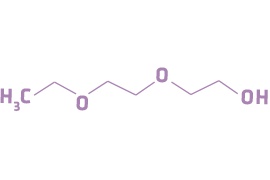
Characteristics
- INCI
- Ethoxydiglycol
- CAS
-
111-90-0
This is the substance number in the Chemical Abstracts Service registry. The CAS number uniquely identifies a substance regardless of language, trade name, or synonyms.
- EC
-
203-919-7
This is the substance number in the European chemical identification system (EC number), used in European regulatory databases including ECHA/CosIng.
- IUPAC
- 2-(2-Ethoxyethoxy)Ethanol; Carbitol; Diethylene Glycol Monoethyl Ether; Degee
- Functions
- humectant, perfuming, solvent
- Irritancy
-
0 / 5
Irritation potential: 0–5, where 5 is the highest irritation rating for the ingredient.
More detail → - Comedogen.
-
0 / 5
Comedogenicity index: 0–5. A non-comedogenic ingredient (0–1) is unlikely to cause cosmetic acne.
More detail → - EU Restr.
-
III/297
EU regulatory status: restricted use. The ingredient is permitted in EU cosmetics but its use and labelling are regulated.
More detail →
Who it's for
Description
Some ingredients do glamorous work behind the scenes, and ethoxydiglycol is very much one of those quiet overachievers. It’s a clear, odorless liquid that shows up mostly to help other ingredients do their jobs better. In cosmetic formulas, that usually means acting as a solvent and solubilizer, which is a fancy way of saying it helps dissolve ingredients that don’t like water very much and keeps tricky actives evenly mixed instead of sulking at the bottom of the bottle.
Its real claim to fame is as an efficacy booster. You’ll often find it paired with ingredients like vitamin C derivatives, self-tanning agents such as DHA, and acne-fighting actives like benzoyl peroxide. Why bother? Because ethoxydiglycol can improve how well these ingredients penetrate and spread on the skin, which may help a formula feel more effective without needing to overload it. In practice, that can mean better delivery and a more elegant texture, especially in lightweight serums and treatment products where you don’t want a greasy after-feel or a chalky mess.
There’s also a hair-care angle here. Ethoxydiglycol can help coloring ingredients distribute more evenly through hair, which is useful if you’re trying to avoid patchy results. Some manufacturers also suggest it may help with longer-lasting color and even support the look of healthier ends, although those kinds of claims should be taken with a pinch of cosmetic salt because they’re not the same as robust independent clinical proof. What we do know is that it’s valued mostly for formulation performance rather than for being a star active in its own right. So if you spot it on an ingredient list, think of it as the backstage crew that helps the lead performers look and work their best.
More detail
A nice odorless liquid used mainly as a superior solubilizer and efficacy booster for cosmetic active ingredients such as skincare bigshot vitamin C, self-tanning active DHA or the anti-acne gold standard, benzoyl peroxide.
Other than that it can also be used in hair care products where it gives a longer-lasting and more uniform coloring. According to a manufacturer, it might even prevent the formation of split ends.
Evidence & Research on Ethoxydiglycol
Products with Ethoxydiglycol (2 118 total)
Most often found in Be Minimalist products (53 items)


