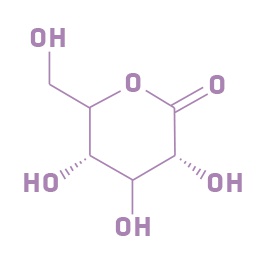
Characteristics
- INCI
- Gluconolactone
- CAS
-
90-80-2
This is the substance number in the Chemical Abstracts Service registry. The CAS number uniquely identifies a substance regardless of language, trade name, or synonyms.
- EC
-
202-016-5
This is the substance number in the European chemical identification system (EC number), used in European regulatory databases including ECHA/CosIng.
- Functions
- chelating, skin conditioning
Who it's for
How Gluconolactone Works
Looking for an exfoliant that does the job without acting like it has a personal grudge against your face? That’s where gluconolactone comes in. It’s a polyhydroxy acid, or PHA, which makes it a cousin of the better-known AHAs, but with a bigger molecular size and a much gentler attitude. In skin care, that usually means less sting, less redness, and a better chance of your skin actually enjoying the experience. If you’re wondering what gluconolactone is in skin care, think of it as a mild exfoliant with bonus hydration and antioxidant perks.
The benefits of gluconolactone for skin are pretty well documented. In a 12-week study from 2004 comparing a PHA routine with an AHA routine, the PHA group had significantly less stinging and burning, while the anti-aging and smoothing results were similar. That’s a pretty neat trade: you may get softer, smoother skin with a lot less drama. Gluconolactone skin benefits also include humectant-like moisturizing properties, which is why it shows up in everything from a gluconolactone toner to a gluconolactone serum. It can even support the skin barrier, which is fancy-science speak for helping your skin hold onto water a bit better.
It also has antioxidant and chelating abilities, meaning it can help protect formulas from oxidation and may bring a little extra support against environmental stress. Another nice bonus: unlike classic AHAs, gluconolactone has been shown not to increase sun sensitivity in the same way. That does not make sunscreen optional, because your skin is not a daredevil, but it does make this ingredient especially appealing for sensitive skin. If you’re asking how often to use gluconolactone or how to use gluconolactone for skin, the answer depends on the product strength: mild formulas can often be used daily, while stronger exfoliating products may be better a few times a week. The best gluconolactone products are usually the ones paired with soothing ingredients and a sensible concentration, whether it’s used alone or in blends like gluconolactone (and) sodium benzoate, where gluconolactone also helps preserve the formula.
As for gluconolactone pregnancy safety, it is generally considered a gentle exfoliant, but pregnancy is a time when your skin can turn into a moody roommate, so it’s always smart to check with your doctor if you’re unsure. And if you’ve seen gluconolactone in food and wondered is gluconolactone safe to eat, yes, it’s also used as a food additive and acidifier. Different use, same molecule, slightly less glamorous setting. Basically, gluconolactone uses range from skincare to food, but in your routine it really shines when you want exfoliation that feels more polite than aggressive.
Frequently Asked Questions about Gluconolactone
What is gluconolactone in skin care?
What are the benefits of gluconolactone for skin?
Is gluconolactone safe for sensitive skin?
How often should you use gluconolactone on your skin?
Is gluconolactone safe to use during pregnancy?
Gluconolactone: Quick Facts
- It’s a polyhydroxy acid (PHA), that is often referred to as next generation AHA
- It gently lifts off dead skin cells form the skin surface making skin smooth and even
- In the long term it provides anti-aging benefits, like increased skin thickness and decreased wrinkles (though a tad less than even more proven superstar AHAs)
- It’s a great moisturizer and even helps to repair impaired skin barrier
- It’s antioxidant, and does not make your skin more sensitive to the sun
- It can be used even if your skin is very sensitive, rosacea prone or if you are post cosmetic procedure
Evidence & Research on Gluconolactone
-
1
Cutis., 2004 Feb;73(2 Suppl):14-7., A polyhydroxy acid skin care regimen provides antiaging effects comparable to an alpha-hydroxyacid regimen.
-
2
Cutis.,2004 Feb;73(2 Suppl):3-13., The use of polyhydroxy acids (PHAs) in photoaged skin.
-
3
Journal of Cosmetic Dermatology, , Volume 5 (1) – Mar 1, 2006, An evaluation of a polyhydroxy acid skin care regimen in combination with azelaic acid 15% gel in rosacea patients
-
4
Dermatologic Surgery, , Volume 30 (2) – Feb 1, 2004, The Polyhydroxy Acid Gluconolactone Protects Against Ultraviolet Radiation in an In Vitro Model of Cutaneous Photoaging
-
5
Journal of Cosmetic Dermatology, , Volume 4 (1) – Jan 1, 2005, After 30 years … the future of hydroxyacids
-
6
Hunt, Michelle J., and Ross StC Barnetson. "A comparative study of gluconolactone versus benzoyl peroxide in the treatment of acne." Australasian journal of dermatology 33.3 (1992): 131-134.Find in PubMed
Products with Gluconolactone (5 463 total)
Most often found in Dove products (74 items)


