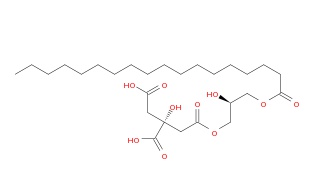
Characteristics
- INCI
- Glyceryl Stearate Citrate
- CAS
-
86418-55-5, 55840-13-6
This is the substance number in the Chemical Abstracts Service registry. The CAS number uniquely identifies a substance regardless of language, trade name, or synonyms.
- EC
-
259-855-5
This is the substance number in the European chemical identification system (EC number), used in European regulatory databases including ECHA/CosIng.
- IUPAC
- 1,2,3-Propanetricarboxylic Acid, 2-Hydroxy-, Ester With 1,2,3-Propanetriol Monooctadecanoate
- Functions
- emollient, emulsifying, skin conditioning
Who it's for
Description
If your moisturizer feels smooth instead of greasy and doesn’t split into a sad little oil slick in the bottle, there’s a decent chance Glyceryl Stearate Citrate is doing some behind-the-scenes heavy lifting. It’s a classic emulsifier, which means it helps water and oil get along, and it also works as a mild emollient, giving skin that soft, velvety after-feel people tend to love. In plain English: it helps formulas stay stable and helps your skin feel more comfortable.
Chemically, it’s a cousin of the better-known glyceryl stearate, but with a citrate group attached, which changes its behavior a bit and makes it especially handy in modern skincare formulas. It’s often made from glycerin, stearic acid, and citric acid, ingredients that are all pretty common in cosmetics. The ingredient itself is not the star of the show, but it’s the kind of support player that makes lotions, creams, and cleansers behave properly instead of separating, pilling, or feeling waxy.
From a skin point of view, glyceryl stearate citrate is considered gentle and well-tolerated, which is why it shows up so often in products for dry, sensitive, or easily annoyed skin. There isn’t a dramatic pile of headline-making studies on it, but emulsifiers in this family have a long track record of safe cosmetic use, and this one is widely used at low concentrations. Its main job is formulation stability rather than treating a specific skin concern, but that’s not trivial: a stable cream is much more likely to deliver its soothing ingredients evenly and feel pleasant enough that you actually keep using it.
You’ll usually find it in moisturizers, lotions, sunscreens, and cleansing creams, especially where a lighter, less greasy texture is wanted. If you’re scanning an ingredient list for potential trouble, this one is generally more of a helpful bystander than a problem child. In other words, it helps products work better and feel nicer, without asking for much attention in return.
More detail
Glyceryl stearate citrate is similar to the super common skincare ingredient glyceryl stearate, and is similarly used to help combine waters and oils (emulsifier) and to make your skin feel nice and soft (emollient).
The main difference between glyceryl stearate citrate and its cousin glyceryl stearate is that this one has a citric acid molecule also attached to its glycerin. This makes it what chemists call a diacylglycerol, which is a fancy word for two acids (in this case, citric acid and stearic acid) attached together with a glycerin bridge. But when it comes to cosmetics, all you need to know is that both glyceryl stearate citrate and glyceryl stearate are safe, tried and true emulsifiers. Expect to see them in formulas with both water-based and oil-based ingredients (think moisturizers and lotions).
Evidence & Research on Glyceryl Stearate Citrate
-
1
“Amended Final Report on the Safety Assessment of Glyceryl Dilaurate, Glyceryl Diarachidate, Glyceryl Dibehenate, Glyceryl Dierucate, Glyceryl Dihydroxystearate, Glyceryl Diisopalmitate, Glyceryl Diisostearate, Glyceryl Dilinoleate, Glyceryl Dimyristate,
Products with Glyceryl Stearate Citrate (4 187 total)
Most often found in Nivea products (90 items)


