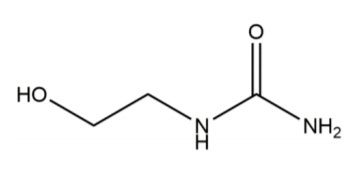
Characteristics
- INCI
- Hydroxyethyl Urea
- CAS
-
1320-51-0
This is the substance number in the Chemical Abstracts Service registry. The CAS number uniquely identifies a substance regardless of language, trade name, or synonyms.
- EC
-
215-304-0
This is the substance number in the European chemical identification system (EC number), used in European regulatory databases including ECHA/CosIng.
- IUPAC
- Urea, (2-Hydroxyethyl)-
- Functions
- hair conditioning, humectant, skin conditioning
Who it's for
Description
If your skin likes hydration but not the sticky, slimy aftermath some moisturizers leave behind, Hydroxyethyl Urea is the kind of ingredient you’ll probably get along with. It is a urea derivative, but unlike the more famous urea-related exfoliating side of the family, this one is mainly about holding water in the skin. In plain English: it acts as a humectant, drawing water into the upper layers of your skin and helping reduce that tight, dehydrated, “why do I suddenly feel 97 years old?” sensation.
The nice thing about this ingredient is that it gives a very skin-like, silky feel instead of the draggy finish some humectants can have. According to manufacturer data, 5% Hydroxyethyl Urea showed a moisturizing effect similar to 5% glycerin, which is not a small compliment since glycerin is basically the overachiever of hydration. The difference is that Hydroxyethyl Urea is often described as feeling less sticky and less tacky, while adding a smooth, lubricious slip to formulas. That makes it especially useful in moisturizers, lotions, gels, and leave-on products where comfort matters just as much as water-binding.
Because it helps improve the skin’s water content, Hydroxyethyl Urea can make skin look and feel more supple, soft, and flexible. It is not an exfoliant in the usual cosmetic sense, so don’t expect it to work like aggressive acids or the classic keratolytic use of urea. Instead, think of it as the well-mannered hydration helper that supports the skin barrier by reducing dryness and improving the feel of rough, tight skin. In formulas, it’s often a quiet but effective supporting actor rather than the dramatic star, which honestly is exactly what many dehydrated skin types want.
Overall, Hydroxyethyl Urea is a smart moisturizing ingredient for anyone who wants the benefits of strong hydration without a heavy or sticky finish. If your skin is dry, flaky, or just chronically parched from weather, cleansing, or overdoing the actives, this is one of those ingredients that can make a noticeable difference in comfort. It may not have the celebrity status of some other humectants, but in the hydration department, it earns its keep.
More detail
A derivative of Urea, that works as a strong moisturizer and humectant meaning that it helps the skin to cling onto water and thus to make it hydrated and elastic.
According to manufacturer's data, Hydroxyethyl Urea has a similar moisturizing ability to glycerin (measured at 5%), but it feels nicer on the skin as it is non-sticky and non-tacky and gives a lubricous and moist feeling to the skin.
Evidence & Research on Hydroxyethyl Urea
-
1
Landa, Peter, et al. "Glycerin and hydroxyethyl urea: Comparing two skin moisturizers." Cosmetics and toiletries 119.10 (2004): 79-88.Find in PubMed
Products with Hydroxyethyl Urea (1 735 total)
Most often found in Hada Labo products (31 items)


