Characteristics
- INCI
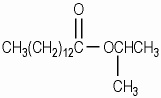
- Isopropyl Myristate
- CAS
-
110-27-0
This is the substance number in the Chemical Abstracts Service registry. The CAS number uniquely identifies a substance regardless of language, trade name, or synonyms.
- EC
-
203-751-4
This is the substance number in the European chemical identification system (EC number), used in European regulatory databases including ECHA/CosIng.
- IUPAC
- Tetradecanoic Acid, Isopropyl Ester
- Functions
- binding, emollient, masking, perfuming
- Irritancy
-
3 / 5
Irritation potential: 0–5, where 5 is the highest irritation rating for the ingredient.
More detail → - Comedogen.
-
3-5 / 5
Comedogenicity index: 0–5. A non-comedogenic ingredient (0–1) is unlikely to cause cosmetic acne.
More detail →
Who it's for
Description
Some ingredients are the skincare equivalent of a good backstage crew member: not flashy, but everything runs better because they’re there. Isopropyl Myristate, often shortened to IPM, is a clear, lightweight ester that gives formulas that silky, dry-slippy feel people love. It’s used as an emollient, solvent, and spreadability booster, so it can make creams, lotions, makeup, and even some cleansers feel less sticky and more elegant on your skin. If you’ve ever wondered about the benefits of isopropyl myristate on skin, the big one is simple: it helps your skin feel softer and smoother, without the heavy greasiness that some oils can leave behind.
From a formulation point of view, it’s also a very handy helper. It can improve the texture of products, help oily formulas feel lighter, and sometimes aid the delivery of other ingredients. That’s why you’ll often see it in blends with other emollients, including isopropyl myristate and liquid paraffin combinations, where it helps cut down the thick, greasy feel of paraffin. In hair products, isopropyl myristate for hair can add slip and help reduce tackiness, which is why it sometimes shows up in conditioners, styling products, and hair serums. As for isopropyl myristate uses, they’re broad: skin care, hair care, makeup, and sometimes even fragrance or active ingredient formulas. It’s also a popular ingredient in large-scale cosmetic manufacturing because it’s usually affordable, so the isopropyl myristate price tends to be friendly for formulators.
So, is isopropyl myristate good for skin? For many people, yes. But here’s the catch: it has a reputation for being quite comedogenic, and acne-prone skin may not always love it. In acne-focused products, it’s often a bit of a gamble, and that’s why people ask about isopropyl myristate acne so often. The safety verdict is more boring than the internet drama suggests: it’s generally considered safe in cosmetics when used as intended, and side effects are usually limited to irritation or breakouts in sensitive or clogged-pore-prone skin. If you’re checking the label, the isopropyl myristate CAS no. is 110-27-0. In other words, it’s a very useful ingredient, just not necessarily the best roommate for every single face.
More detail
A clear, colorless oil-like liquid that makes the skin feel smooth and nice (aka emollient) and it does so without it being greasy.
What's more, it can even reduce the heavy, greasy feel in products with high oil content. It's also fast-spreading meaning that it gives the formula a good, nice slip. It absorbs quickly into the skin and helps other ingredients to penetrate quicker and deeper.
Thanks to all this, it's one of the most commonly used emollients out there. There is just one little drawback: it has a high comedogenic index (5 out of 5...), so it might clog pores if you're prone to it.
Frequently Asked Questions about Isopropyl Myristate
What is isopropyl myristate used for in skincare and cosmetics?
Is isopropyl myristate good for skin?
Can isopropyl myristate cause acne or breakouts?
Is isopropyl myristate safe to use on skin?
How should I use products with isopropyl myristate?
Products with Isopropyl Myristate (5 764 total)
Most often found in Garnier products (96 items)