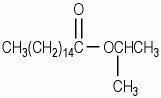
Characteristics
- INCI
- Isopropyl Palmitate
- CAS
-
142-91-6
This is the substance number in the Chemical Abstracts Service registry. The CAS number uniquely identifies a substance regardless of language, trade name, or synonyms.
- EC
-
205-571-1
This is the substance number in the European chemical identification system (EC number), used in European regulatory databases including ECHA/CosIng.
- IUPAC
- Isopropyl Palmitate
- Functions
- binding, emollient, masking, perfuming
- Irritancy
-
1 / 5
Irritation potential: 0–5, where 5 is the highest irritation rating for the ingredient.
More detail → - Comedogen.
-
3-4 / 5
Comedogenicity index: 0–5. A non-comedogenic ingredient (0–1) is unlikely to cause cosmetic acne.
More detail →
Who it's for
Description
If you’ve ever used a lotion or foundation that felt oddly silky, spread like a dream, and seemed to disappear into the skin without much fuss, there’s a good chance isopropyl palmitate was doing some behind-the-scenes heavy lifting. It’s a lightweight emollient ester made from isopropyl alcohol and palmitic acid, so it’s often described as a smooth, dry-feeling oil. In plain English: it helps products glide, softens roughness, and leaves your skin feeling less draggy and more plush. It’s also used in hair products for the same reason, giving strands a slicker, softer feel without the heaviness of richer oils.
So, is it good for skin? In the right formula, absolutely. Its main job is not to treat acne or act as a miracle active, but to improve texture, spreadability, and the sensory feel of a product. That said, it has a bit of a reputation online because it can be comedogenic for some people. The old rabbit-ear comedogenicity tests often gave isopropyl palmitate a high score, sometimes cited around 4 out of 5, which is why you’ll see acne-prone folks on Reddit side-eyeing it. Real skin is not a rabbit ear, though, and whether it breaks you out depends a lot on the whole formula, the amount used, and your own skin’s mood. If your skin is very clog-prone, it may be worth patch testing or choosing lighter formulas.
People also compare it a lot with isopropyl myristate, and the two are close cousins. Both are silky esters used for similar cosmetic purposes, but isopropyl myristate has a slightly shorter fatty chain, which can make it feel a touch lighter and sometimes even more likely to clog pores in some formulas. In practice, the difference between the two is usually less important than the full ingredient list. As for whether it’s natural or toxic: it’s derived from fatty acid chemistry, so it’s not “natural” in the leafy-green-juice sense, but it is widely used and considered safe in cosmetics at normal concentrations. Side effects are usually limited to the usual suspects like irritation or breakouts in sensitive skin, rather than anything dramatic or scary.
Isopropyl palmitate is one of those ingredients that sounds more intimidating than it is. The real question isn’t “is it bad for skin?” but “does your skin like this formula?” For many people, the answer is yes: smooth texture, better slip, a less greasy finish, and a nicer feel overall. For others, especially if acne is your ongoing frenemy, it may not be the best match. That’s the fun and mildly annoying truth about cosmetic ingredients: the label gives you clues, but your skin gets the final vote.
More detail
A clear, colorless emollient ester (oily liquid from isopropyl alcohol + palmitic acid) that makes the skin nice and smooth. It has very good spreading properties and gives a silky touch to the products.
Frequently Asked Questions about Isopropyl Palmitate
What is isopropyl palmitate used for in skincare?
Is isopropyl palmitate good for skin?
Can isopropyl palmitate cause acne or clogged pores?
What is the difference between isopropyl palmitate and isopropyl myristate?
Is isopropyl palmitate safe to use?
Products with Isopropyl Palmitate (4 325 total)
Most often found in Nivea products (238 items)


