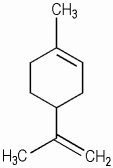
Characteristics
- INCI
- Limonene
- CAS
-
138-86-3
This is the substance number in the Chemical Abstracts Service registry. The CAS number uniquely identifies a substance regardless of language, trade name, or synonyms.
- EC
-
205-341-0, 931-893-3
This is the substance number in the European chemical identification system (EC number), used in European regulatory databases including ECHA/CosIng.
- IUPAC
- 1-Methyl-4-Isopropenylcyclohexene; Dipentene
- Functions
- deodorant, perfuming, solvent
- EU Restr.
-
III/88 III/167 III/168
EU regulatory status: restricted use. The ingredient is permitted in EU cosmetics but its use and labelling are regulated.
More detail →
Who it's for
Description
That bright, zesty smell you get from oranges and lemons is often thanks to limonene, a very common fragrance terpene that shows up in loads of plants, especially citrus peel oil where it can make up 50–90% of the oil. In skincare, its main job is simple: make products smell fresh and citrusy. So if you’re hunting for the best limonene free perfume or the best limonene and linalool free products, you’re usually trying to avoid that lovely scent molecule rather than chase a skin benefit.
There is a tiny bit of geeky usefulness here, though. Limonene has been studied as a penetration enhancer, meaning it can help oil-loving ingredients move through the skin a bit more easily. That sounds clever, but it’s a double-edged sword: if your skin barrier is already cranky, helping random ingredients sink in is not always a gift. When people search for the benefits of limonene in skin care or the benefits of limonene on skin, this is really the main science-backed angle. It is also one reason limonene shows up in some cleaning products and industrial formulas, where its solvent-like properties are handy.
The catch is oxidation. Fresh limonene is one thing; limonene that has been sitting around in air and light is another. Once it oxidizes, it can become a well-known skin sensitizer and a trigger for allergic contact dermatitis. That’s why products with limonene are a bigger deal for sensitive skin, and why “fragrance-free” or specifically limonene and linalool free products may be a smarter pick if your skin tends to react. In patch test clinics, oxidized limonene has repeatedly turned up among fragrance allergens, which is not exactly a glowing review.
You may also see limonene talked about online in completely different contexts, like the health benefits of d limonene, how to take d limonene for acid reflux, or how to use d limonene for cleaning. Those are mostly about the isolated compound used as a supplement or solvent, not the tiny fragrance amount in a face wash. For skincare, the takeaway is much less glamorous: limonene can make products smell nice, but if you are sensitive, the best limonene free shampoo, best limonene free products, or best limonene free perfume may simply be the ones that don’t leave your skin playing chemist with oxidized fragrance molecules.
More detail
A super common and cheap fragrance ingredient. It's in many plants, e.g. rosemary, eucalyptus, lavender, lemongrass, peppermint and it's the main component (about 50-90%) of the peel oil of citrus fruits.
It does smell nice but the problem is that it oxidizes on air exposure and the resulting stuff is not good for the skin. Oxidized limonene can cause allergic contact dermatitis and counts as a frequent skin sensitizer.
Limonene's nr1 function is definitely being a fragrance component, but there are several studies showing that it's also a penetration enhancer, mainly for oil-loving components.
All in all, limonene has some pros and cons, but - especially if your skin is sensitive - the cons probably outweigh the pros.
Frequently Asked Questions about Limonene
What is limonene in skincare and why is it used?
Is limonene good for skin?
Can limonene cause an allergy or irritation?
What does d-limonene do in cosmetic products?
Should I avoid products with limonene if I have sensitive skin?
Evidence & Research on Limonene
-
1
Journal of Cosmetic Dermatology, Volume 9 (3)–Sep 1, 2010, Original Contribution: Top 10 botanical ingredients in 2010 anti‐aging creams
-
2
Matura, Mihály, et al. "Oxidized citrus oil (R-limonene): a frequent skin sensitizer in Europe." Journal of the American academy of dermatology 47.5 (2002): 709-714.Find in PubMed
-
3
Ahmad, Muhammad Mushtaq, et al. "Genetic variability to essential oil composition in four citrus fruit species." Pakistan Journal of Botany 38.2 (2006): 319.Find in PubMed
-
4
Takayama, Kozo, and Tsuneji Nagai. "Limonene and related compounds as potential skin penetration promoters." Drug Development and industrial pharmacy 20.4 (1994): 677-684.Find in PubMed
-
5
Koyama, Yasuo, et al. "Comparative analysis of percutaneous absorption enhancement by d-limonene and oleic acid based on a skin diffusion model." Pharmaceutical research 11.3 (1994): 377-383.Find in PubMed
Products with Limonene (28 257 total)
Most often found in L'Oreal products (524 items)


