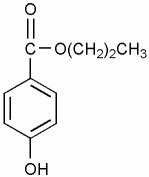
Characteristics
- INCI
- Propylparaben
- CAS
-
94-13-3
This is the substance number in the Chemical Abstracts Service registry. The CAS number uniquely identifies a substance regardless of language, trade name, or synonyms.
- EC
-
202-307-7
This is the substance number in the European chemical identification system (EC number), used in European regulatory databases including ECHA/CosIng.
- IUPAC
- Propyl 4-Hydroxybenzoate
- Functions
- perfuming, preservative
- Irritancy
-
0 / 5
Irritation potential: 0–5, where 5 is the highest irritation rating for the ingredient.
More detail → - Comedogen.
-
0 / 5
Comedogenicity index: 0–5. A non-comedogenic ingredient (0–1) is unlikely to cause cosmetic acne.
More detail → - EU Restr.
-
V/12
EU regulatory status: restricted use. The ingredient is permitted in EU cosmetics but its use and labelling are regulated.
More detail →
Who it's for
Description
Parabens have a weird reputation for ingredients that mostly just want to do a boring but important job: keep your products from turning into a bacterial petri dish. Propylparaben is one of the more commonly used preservative members of the paraben family, and its main role is simple: protect the formula from microbes. That means it helps creams, lotions, and other water-containing products stay usable for longer, which is very much a benefit for your skin because spoiled products are far more of a problem than propylparaben itself.
So, are propylparaben safe? In normal cosmetic use, the answer from regulators is generally yes. The European Scientific Committee on Consumer Safety re-evaluated propylparaben and set a maximum of 0.14% when used alone in leave-on and rinse-off products, based on the available safety data. It’s also worth knowing that parabens such as propylparaben and methylparaben have been studied for decades because people worry about hormone effects and cancer. The short version is that the evidence used in safety assessments has not shown a clear cancer-causing effect from the tiny amounts used in cosmetics. The “why is propylparaben bad” story is mostly about public concern, not strong real-world proof of danger.
What about propylparaben side effects and propylparaben safe for skin? For most people, these are uncommon. Like many preservatives, it can irritate very sensitive skin in rare cases, but it is generally considered well tolerated at allowed concentrations. In fact, preservatives like this often prevent far more skin trouble than they cause, since contaminated products can trigger infection or irritation. If you have seen “propylparaben sodium” mentioned online, that’s usually confusion with another preservative naming convention rather than a standard cosmetic ingredient name. And yes, propylparaben is also used in food in some countries, which is another clue that it has been assessed quite a lot. So the geeky takeaway is: its benefit is preservation, its skin benefit is keeping formulas safe, and its danger is mostly the internet’s dramatic storytelling.
More detail
A very common type of feared-by-everyone-mostly-without-scientific-reason parabens. It's a cheap, effective and well-tolerated ingredient to make sure the cosmetic formula does not go wrong too soon.
Frequently Asked Questions about Propylparaben
Is propylparaben safe in skincare products?
What does propylparaben do in a product?
Can propylparaben cause cancer?
Are propylparaben and methylparaben different?
Can propylparaben irritate or sensitize the skin?
Evidence & Research on Propylparaben
Products with Propylparaben (5 967 total)
Most often found in Vaseline products (135 items)


