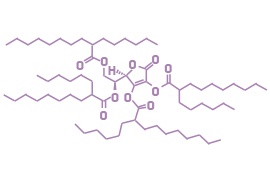
Characteristics
- INCI
- Tetrahexyldecyl Ascorbate
- Ru.
- Form of Vitamin C, THDA
- IUPAC
- Tetrakis(2-Hexyldecyl) Ascorbate
- Functions
- antioxidant, skin conditioning
Who it's for
Description
If you’ve ever stared at a vitamin C serum label and wondered why the name looks like a chemistry exam, welcome to the club. Tetrahexyldecyl Ascorbate is usually pronounced something like “tet-ra-HEK-see-deh-sil as-KOR-bate,” and it’s one of the more popular vitamin C derivatives in skincare. People search for what it is, how to use tetrahexyldecyl ascorbate, and whether it’s effective because it promises the brightening, antioxidant goodness of vitamin C without some of the drama of pure L-ascorbic acid. In other words, it’s the “I want vitamin C, but make it less fussy” option.
So what does it actually do? The big appeal of tetrahexyldecyl ascorbate, often shortened to THD, is that it’s oil-soluble and very stable in formulas. That makes it easier for formulators to create elegant serums and creams, especially if your skin hates stingy, low-pH vitamin C products. Lab studies have shown that it can penetrate skin well and may convert to ascorbic acid in the skin, which is the whole point of a vitamin C derivative. In one in-vitro study, it showed antioxidant activity, collagen-supporting effects, and a marked reduction in melanin production in cell cultures. That sounds impressive, but the catch is that a lot of the evidence is still lab-based rather than large human trials.
If you’re comparing tetrahexyldecyl ascorbate vs ascorbic acid, the trade-off is simple: L-ascorbic acid has the strongest real-world evidence, but it can be unstable and irritating; THD is gentler and more stable, but not as thoroughly proven on actual humans. Compared with ascorbyl tetraisopalmitate, another oil-soluble derivative, THD is in the same “promising but not superstar-level proven” category, and the two are often chosen for similar reasons. As for the best tetrahexyldecyl ascorbate products or the best tetrahexyldecyl ascorbate serum, the truth is that formulation matters more than hype on Reddit. Look for a well-made, air-restrictive package and a sensible concentration; many formulas sit around 5–20%, though there isn’t one universally proven best percentage.
So, is tetrahexyldecyl ascorbate a good pick for your skin? Yes, especially if you want a vitamin C product that’s usually more comfortable and less temperamental. The question of whether it’s natural is a bit slippery: the molecule can be derived from natural starting materials, but the final ingredient is a processed cosmetic chemical, not something plucked from a lemon and called it a day. If you’re hunting for the best vitamin C tetrahexyldecyl ascorbate serum or browsing tetrahexyldecyl ascorbate products in the UK or elsewhere, focus less on the marketing and more on packaging, texture, and whether your skin actually likes it. The bottom line? Promising, pleasant, and worth trying—just not the most proven vitamin C on the shelf.
More detail
Tetrahexyldecyl Ascorbate is a stable, oil-soluble form of skincare big shot Vitamin C. If you do not know, why Vitamin C is such a big deal in skincare, click here and read all about it. We are massive vitamin C fans and have written about it in excruciating detail.
So now, you know that Vitamin C is great and all, but it's really unstable and gives cosmetics companies many headaches. To solve this problem they came up with vitamin C derivatives, and one of them is Tetrahexyldecyl Ascorbate (let's call it THDA in short).
It's a really promising candidate (see below), but while reading all the goodness about it in a minute, do not forget that derivatives not only have to be absorbed into the skin but also have to be converted to pure vitamin C (ascorbic acid or AA) and the efficacy of the conversion is often unknown. In addition, vitamin C's three magic properties (antioxidant, collagen booster, skin brightener) are all properly proven in-vivo (on real people), but for the derivatives, it's mostly in-vitro studies or in the case of THDA, it's in-vitro and done by an ingredient supplier.
With this context in mind let's see what THDA might be able to do. First, it is stable (if pH < 5), easy to formulate, and a joy to work with for a cosmetic chemist.
Second, because it's oil-soluble, its skin penetration abilities seem to be great. So great in fact, that it surpasses the penetration of pure vitamin C threefold at the same concentration and it penetrates successfully into the deeper layers of the skin (that is usually important to do some anti-aging work). There is also in-vitro data showing that it converts to AA in the skin.
Third, THDA seems to have all three magic abilities of pure vitamin C: it gives antioxidant protection from both UVB and UVA rays, it increases collagen synthesis (even more than AA) and it has a skin brightening effect by reducing melanogenesis by more than 80% in human melanoma cell cultures.
So this all sounds really great, but these are only in-vitro results at this point. We could find Tetrahexyldecyl Ascorbate mentioned only in one published in-vivostudy that examined the anti-aging properties of a silicone formula containing 10% AA and 7% THDA. The authors theorized that the 10% AA is released slowly from the silicon delivery system and probably stays in the upper layer of the skin to give antioxidant benefits, while THDA penetrates more rapidly and deeply and gives some wrinkle-reducing benefits. The study was a small (10 patients), double-blind experiment, and the formula did show some measurable anti-aging results. However, it is hard to know how much pure vitamin C or THDA can be thanked.
Bottom line: a really promising, but not well-proven vitamin C derivative that can be worth a try especially if you like experimenting (but if you like the tried and true, pure vitamin C will be your best bet).
Frequently Asked Questions about Tetrahexyldecyl Ascorbate
What is tetrahexyldecyl ascorbate in skincare?
What are the benefits of tetrahexyldecyl ascorbate?
Is tetrahexyldecyl ascorbate effective compared with L-ascorbic acid?
How do you use a tetrahexyldecyl ascorbate serum?
What percentage of tetrahexyldecyl ascorbate is usually best?
Evidence & Research on Tetrahexyldecyl Ascorbate
-
1
Journal of Cosmetic Dermatology, Volume 11 (4) – Dec 1, 2012, Stability, transdermal penetration, and cutaneous effects of ascorbic acid and its derivatives
-
2
Dermatologic Surgery, Mar 1, 2002, Double‐Blind, Half‐Face Study Comparing Topical Vitamin C and Vehicle for Rejuvenation of Photodamage
-
3
Barnet Products Corp, Stable forms of Vitamin C, Technical Bulletin, 2001
Products with Tetrahexyldecyl Ascorbate (3 521 total)
Most often found in Uriage products (53 items)


