Bis-Ethylhexyloxyphenol Methoxyphenyl Triazine
Tinosorb S, Bemotrizinol
Características
- INCI
- Bis-Ethylhexyloxyphenol Methoxyphenyl Triazine
- Ru.
- Tinosorb S, Bemotrizinol
- CAS
-
187393-00-6
Este é o número da substância no registo do Chemical Abstracts Service. O número CAS identifica exclusivamente uma substância, independentemente da língua, Nome comercial ou sinónimos.
- IUPAC
- 2,2'-[6-(4-Methoxyphenyl)-1,3,5-Triazine-2,4-Diyl]Bis[5-[(2-Ethylhexyl)Oxy]-Phenol]
- Funções
- skin conditioning, uv absorber, uv filter
- Eu Restr.
-
VI/25
Estatuto regulamentar da UE: utilização restrita. O ingrediente é permitido nos cosméticos da UE, mas a sua utilização e rotulagem são regulamentadas.
Mais detalhes →
Para quem
Descrição
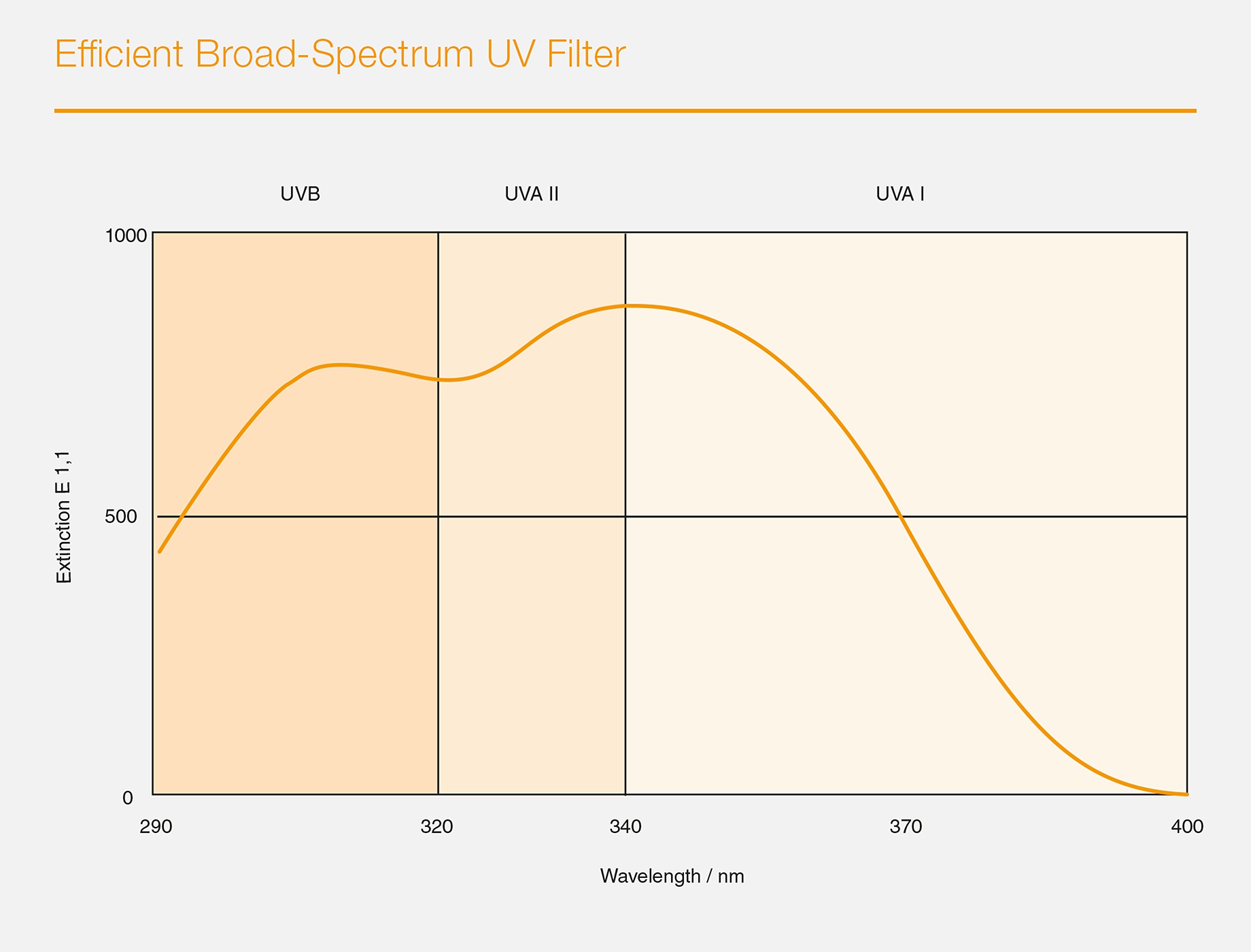
If sunscreen filters had a glamour award, this one would probably show up wearing sunglasses indoors. Bis-Ethylhexyloxyphenol Methoxyphenyl Triazine is a modern, oil-soluble UV filter that delivers very strong broad-spectrum protection, covering both UVB and UVA rays. It has absorption peaks around 310 nm and 345 nm, which means it does a particularly good job in the parts of the UV range that contribute to sunburn and long-term skin damage. In plain English: it helps your sunscreen actually act like a proper sunscreen, not a polite suggestion.
One of its biggest claims to fame is photostability. Some older filters break down as soon as sunlight hits them, which is a bit awkward for a sunscreen ingredient. This one stays impressively intact under UV exposure and can even help stabilize other filters, including the famously finicky avobenzone. That makes it especially useful in formulas that are trying to achieve high SPF and reliable UVA protection without falling apart halfway through your beach walk. In a 2007 comparison of 18 EU-available sunscreen agents, this filter came out looking particularly strong: at the highest allowed concentration, it delivered an SPF of 20 on its own, which is no small feat for a single filter.
It’s also a bit of a globe-trotter. You’ll find it in sunscreens in Europe, Australia, and many Asian markets, but not in the US, where the sunscreen approval process has made newer UV filters frustratingly slow to reach shelves. That has nothing to do with its performance and everything to do with regulation. From a formulation point of view, it’s a slightly yellowish powder that is not meant to sink deeply into your skin, because sunscreen ingredients do their best work sitting on the surface and forming a protective film. That’s exactly where this one likes to be.
Safety-wise, the news is reassuring. It has a great safety profile and, unlike some older chemical filters that got people worried about hormone-like activity, it has not shown estrogenic activity in the usual testing. So the short version is this: if you see this mouthful on a label, your sunscreen is probably trying very hard to be effective, stable, and well-behaved. Not bad for a molecule with a name that looks like it lost a fight with a keyboard.
Mais detalhes
Seu nome INCI é a pouco de um bocado, mas Bis-Etilhexiloxifenol Metoxifenil triazina vale a pena reconhecê-lo como é um dos melhores agentes protetores solares conhecidos hoje. Infelizmente, não é aprovado pela FDA, então você não o encontrará em protetores solares provenientes dos EUA (não porque não seja bom, mas porque os regulamentos dos EUA tornam impossível a aprovação de novos agentes protetores solares), mas está amplamente disponível em outras partes do mundo, como Europa, Austrália ou Ásia.
É um amplo espectro (abrange toda a gama de UVB e UVA, 280-400 nm) agente protetor solar químico com proteções de pico em cerca de 310 e 345 nm e ao contrário dos filtros UV mais antigos, é muito fotoestável.Dificilmente se deteriora na presença de luz UV e também é útil na estabilização de outros agentes protetores solares menos estáveis, como o famoso protetor UVA, avobenzone.
Trata-se de um agente protector solar de nova geração que foi especificamente concebido para um elevado FPS e uma boa protecção UVA e com base num estudo de 2007 que em comparação com 18 agentes protectores solares disponíveis na UE, tinha realmente a melhor protecção FPS (utilizaram a concentração mais elevada permitida pelos regulamentos DA UE de cada 18 filtros solares e o Trinosorb s atribuiu um FPS 20 por si só).
É um pó oleoso, ligeiramente amarelado, que não é demasiado absorvido pela pele. Esta é uma boa notícia para um agente protetor solar, pois ele precisa estar na superfície da pele para fazer seu trabalho corretamente. Em relação aos efeitos colaterais do Bis-Etilhexiloxifenol Metoxifenil triazina, temos boas notícias aqui também: tem um excelente perfil de segurançae, ao contrário de alguns outros filtros solares químicos, o Trinosorb S (E M) não apresenta actividade estrogénica.
No geral, pensamos Trinosorb S é uma das melhores opções de filtro solar disponível hoje.
Você gosta de protetores solares? Temos explicações brilhantes (juntamente com listas de produtos) sobre outros também:
- Metileno bis-Benzotriazolil Tetrametilbutilfenol, também conhecido como Tinosorb M, o bom amigo da nossa molécula actual Tinosorb S
- Tris-bifenil triazina, também conhecida como Tinosorb A2B, a mais nova adição à família Tinosorb que protege fortemente em um comprimento de onda intermediário que a maioria dos outros filtros perde
- Etilhexil Triazona, também conhecida como Uvinul t 150, outro agente protector solar de nova geração com protecção UVB super-elevada
- Dietilamino Hidroxibenzoil hexil Benzoato, também conhecido como Uvinul A Plus, um protetor solar de nova geração para proteção UVA
Evidências e pesquisas sobre Bis-Ethylhexyloxyphenol Methoxyphenyl Triazine
-
1
Pharmazie 62: 449–452 (2007), Study of the efficacy of 18 sun filters authorized in European Union tested in vitro
-
2
Regulatory Toxicology and Pharmacology 34, 287–291 (2001), Lack of Binding to Isolated Estrogen or Androgen Receptors, and Inactivity in the Immature Rat Uterotrophic Assay, of the Ultraviolet Sunscreen Filters Tinosorb M-Active and Tinosorb S
-
3
Chatelain, Eric, and Bernard Gabard. "Photostabilization of Butyl methoxydibenzoylmethane (Avobenzone) and Ethylhexyl methoxycinnamate by Bis‐ethylhexyloxyphenol methoxyphenyl triazine (Tinosorb S), a New UV Broadband Filter¶." Photochemistry and Photobio
Produtos com Bis-Ethylhexyloxyphenol Methoxyphenyl Triazine (6 103 total)
Mais frequente em produtos Avene (130 itens)


