Characteristics
- INCI
- Squalene
- CAS
-
111-02-4
This is the substance number in the Chemical Abstracts Service registry. The CAS number uniquely identifies a substance regardless of language, trade name, or synonyms.
- EC
-
203-826-1
This is the substance number in the European chemical identification system (EC number), used in European regulatory databases including ECHA/CosIng.
- IUPAC
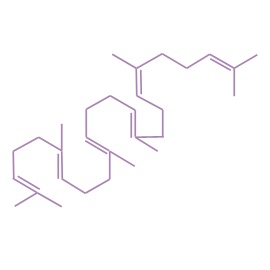
- 2,6,10,15,19,23-Hexamethyltetracosa-2,6,10,14,18,22-Hexaene
- Functions
- antistatic, emollient, hair conditioning, refatting, skin conditioning
Who it's for
Description
If your skin could pick a favorite oil, squalene would probably be in the running. It’s one of those naturally occurring lipids that your skin already knows and uses: about 13% of human sebum is squalene. That makes it a very skin-like ingredient, which is why it feels at home in moisturizers, facial oils, and other emollient formulas. Historically it was first sourced from shark liver, but these days it can also be obtained from plant sources such as olive, peanut, and pumpkin oils.
What makes it interesting is its chemistry. Squalene is an unsaturated hydrocarbon, which is a fancy way of saying it contains double bonds and only carbon and hydrogen atoms. Those double bonds are a double-edged sword: they make squalene more prone to oxidation, but they also give it some antioxidant potential. In other words, it can help mop up some of the reactive nasties that contribute to oxidative stress. The catch is that this reactivity also makes it less stable than its better-known cousin, squalane, so it tends to have a shorter shelf life and is less common in finished products.
As a skin care ingredient, squalene works mainly as a light emollient. It helps smooth the skin surface and can reduce that tight, dry feeling without being especially heavy or greasy. Because it’s so similar to components your skin already makes, it’s generally considered a very friendly-feeling ingredient for dry or mature skin in particular. That said, its usefulness in formulas depends a lot on packaging and antioxidant support, since oxidation can turn it from skin-comforting to a bit temperamental.
If you keep seeing squalene and squalane mixed up, you’re not imagining things. They are closely related, but squalane is the hydrogenated, more stable version, which is why it shows up far more often in skincare. Squalene is the more biologically familiar one, while squalane is the practical overachiever that survives the bottle better. So if a formula uses squalene, you’re looking at a more natural-to-skin lipid with some antioxidant perks, but also one that needs a bit more cosmetic babysitting.
More detail
Squalene is an oily liquid that originally comes from shark liver but luckily it can also be found in a couple of plant oils. Olive (0.6%), peanut (0.1%) and pumpkin (0.35%) oils contain it, though not in huge amounts.
What contains more of it, is the sebum (the oily stuff) that our skin produces. About 13% of human sebum is squalene, which means that it’s animportant skin-identical ingredient and NMF (natural moisturizing factor).
Chemically speaking, it is an unsaturated (has double bonds) hydrocarbon (contains only carbon and hydrogen) molecule, that can undergo oxidation. On the pro side, this means that squalene can act as an antioxidant(while its no-double-bond version sister, squalane cannot), but on the con side, squalene is less stable and has a shorter shelf life.
This is probably the main reason why its no-double bond and hence more stable sister, squalane shows up more often on ingredient lists. Read about squalane here >>
Evidence & Research on Squalene
-
1
European Journal of Lipid Science and Technology, Volume 111 (5) – May 1, 2009, Squalene: A natural antioxidant?
-
2
Advances in food and nutrition research., 2012;65:223-33., Biological importance and applications of squalene and squalane.Find in PubMed
Products with Squalene (2 189 total)
Most often found in Bielenda products (223 items)


