Urea
Carbamide
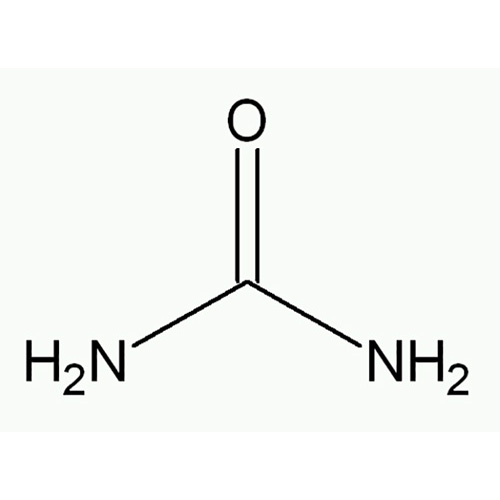
Characteristics
- INCI
- Urea
- Ru.
- Carbamide
Who it's for
Description
Urea sounds a bit science-lab and a bit suspiciously like something you’d rather not chat about at dinner, but on your skin it’s actually a total multitasker. It’s a natural part of your skin’s own moisturizing system, where it helps hold water in the outer layer and keep things soft, flexible and less flaky. In healthy skin, urea makes up about 7% of the natural moisturizing factors, so this is one of those ingredients your skin already knows and likes.
As a skincare ingredient, urea pulls double duty. At lower levels, it works as a humectant, meaning it attracts water and helps relieve dryness in a body lotion, hand cream or face moisturizer. At higher levels, it becomes a gentle keratolytic, which is a fancy way of saying it helps loosen rough, thickened skin and smooth out buildup. That’s why urea creams are often a go-to for calluses, cracked heels and keratosis pilaris. Studies have shown that creams with 10% urea can improve skin hydration and roughness, while stronger formulas in the 20–40% range are commonly used for stubborn thick skin on feet and elbows.
If you’re wondering how to use urea cream, the short version is: start with the right strength for the job. A lower-percentage urea lotion or moisturizer can usually be used on the face or body once or twice daily, while a richer foot cream is often best applied to clean, dry feet, especially after bathing. 40% urea creams are usually reserved for very thick areas like heels or calluses, and not for slathering all over your face unless you enjoy the sensation of overachiever skincare. For dry hands, rough patches or body dryness, a well-formulated urea cream can be one of the best bets out there.
And since people sometimes search for the “best” urea body lotion or cream, here’s the honest answer: the best one is usually the one with the right concentration for your skin concern and a formula you’ll actually use. Urea is a particularly good ingredient if your skin is dry, rough, scaly or prone to flaking, because it doesn’t just sit on top and babysit the problem — it helps your skin behave more like itself again. Not bad for a molecule also famous in fertilizer, where it’s used to feed plants by providing nitrogen. Different job, same no-nonsense efficiency.
More detail
Yes, it's the thing that can be found naturally in pee. And in the skin. It is an awesome natural moisturizing factor, aka NMF. NMFs are important components that help the skin to hold onto water and keep it plump, elastic and hydrated. Urea makes up about 7% of NMFs next to other things such as amino acids (40%), PCA (12%) or Lactate (12%).
What makes urea special, is that it is not only a simple moisturizer, but it is thought to be a "small-molecule regulator of epidermal structure and function" meaning that it has a bunch of extra biological activities. It acts as a mild keratolytic agent (some of its moisturizing action is thought to come from urea's ability to break down bonds in the protein called filaggrin and thus freeing up amino acids in the skin), enhances antimicrobial peptide expression and improves skin barrier function.
Being a mild keratolytic agent and strong moisturizer means that high-percentage (10-40%) urea treatments are found effective in a bunch of skin disorders connected to excessive dryness and malfunctioning skin barrier such as ichthyosis, xerosis, psoriasis, eczema and seborrheic dermatitis.
Overall, just like glycerin, urea is a real oldie but a goodie, a nice ingredient in any moisturizer.
Frequently Asked Questions about Urea
What does urea do in skincare?
Is urea good for very dry or rough skin?
Can urea help with cracked heels and calluses?
Can urea be used on the face?
What concentration of urea should I look for in a cream or lotion?
Evidence & Research on Urea
-
1
Pan, Michael, et al. "Urea: a comprehensive review of the clinical literature." Dermatology online journal 19.11 (2013).
-
2
Grether-Beck, Susanne, et al. "Urea uptake enhances barrier function and antimicrobial defense in humans by regulating epidermal gene expression." Journal of Investigative Dermatology 132.6 (2012): 1561-1572.Find in PubMed
-
3
Lodén, Marie. "Role of topical emollients and moisturizers in the treatment of dry skin barrier disorders." American journal of clinical dermatology 4.11 (2003): 771-788.Find in PubMed
Products with Urea (5 262 total)
Most often found in Murad products (91 items)


