Linoleic Acid
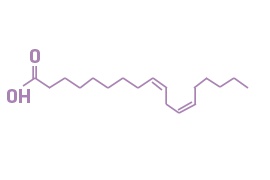
LA, omega-6 fatty acid, 18:2 cis-9, 12, Form of Vitamin F
Characteristics
- INCI
- Linoleic Acid
- Ru.
- LA, omega-6 fatty acid, 18:2 cis-9, 12, Form of Vitamin F
- IUPAC
- 9,12-Octadecadienoic Acid (9Z, 12Z)-
- Functions
- antistatic, cleansing, emollient, hair conditioning, skin conditioning, surfactant
Who it's for
Description
If your skin barrier had a favorite building block, linoleic acid would be very high on the guest list. This omega-6 polyunsaturated fatty acid is “essential,” which means your body cannot make it on its own and needs it from food or topical sources. Because it has two double bonds, it has a bendy, liquid-friendly structure that helps keep oils fluid rather than waxy. That’s also why linoleic-acid-rich plant oils such as sunflower and safflower oil tend to feel lighter on skin than more oleic-acid-heavy oils.
In your skin, linoleic acid is a real structural player. It is one of the most abundant fatty acids in the epidermis and helps build ceramides, the lipids that keep your barrier tight and water loss under control. When skin is low in linoleic acid, the barrier gets leaky and cranky — not ideal if your skin is dry, sensitive, or easily irritated. In one classic study, topical linoleic acid–rich sunflower oil repaired barrier function quickly, while olive oil, which is richer in oleic acid, did not have the same effect. That’s why linoleic-acid-rich formulas can be such a nice fit when you’re hunting for the best linoleic acid moisturizer or the best linoleic acid oils for skin.
There’s also good geekery here for acne-prone skin. Research has found that acne-affected skin tends to have lower linoleic acid levels and relatively more oleic acid. In a 4-week double-blind study, a 2.5% linoleic acid gel reduced microcomedones by about 25%, which is pretty neat because microcomedones are the tiny clogs that can turn into full-blown breakouts. Linoleic acid may also help with post-acne marks and uneven tone by supporting normal shedding of pigmented cells and by influencing melanin production. And if you’ve ever seen claims about the benefits of alpha linoleic acid, gamma linoleic acid, conjugated linoleic acid, or cis linoleic acid, it’s worth remembering that these are related but not identical fatty acids with their own quirks in the body — useful as nutrients, but not interchangeable with cosmetic linoleic acid.
Bottom line: linoleic acid is a smart, barrier-friendly ingredient that can help dry, irritated, and acne-prone skin look and behave better. It also turns up in many food sources of linoleic acid and linoleic acid foods, but for skincare you want it in a formula that keeps it stable and actually gets it onto your skin. If you’re scanning for the best linoleic acid for skin, look for plant oils and lightweight moisturizers that make this humble fatty acid the star rather than the sidekick.
More detail
The famous omega-6 fatty acid, the mother of all ω-6 fatty acids in our body. It is a so-called polyunsaturated fatty acid meaning it has more than one (in this case two) double bonds and a somewhat kinky structure that makes LA and LA-rich oils a thin liquid.
It is also an essential fatty acid meaning our body cannot synthesize it and has to take it from food. This is not hard at all as plenty of nuts (such as flax, poppy or sesame seeds) and vegetable oils (such as sunflower or safflower) are rich in LA. The hard thing seems to be eating enough omega-3-s, more specifically eating a healthy ratio of omega-6 to omega-3, but that is a topic for a what-is-good-to-eat-site and not for us.
As for linoleic acid and the skin, LA is a really important little guy found naturally in our skin. It is the most abundant fatty acid in the epidermis and it serves as a structural precursor for important skin lipids called ceramides. Knowing this, it will not come as a surprise that Linoleic acid has a central role in the structure and function of stratum corneum permeability, aka healthy skin barrier. LA deficiency leads to an impaired more permeable skin barrier and the topical application of LA-rich sunflower oil can fix this issue rapidly (while oleic-rich olive oil did not have the same barrier repairing effect).
LA is not only important for dry, barrier damaged skin types but also for acne-proneskin. Research shows that problem skin has lower levels of linoleic acid (and higher levels of oleic acid) than normal skin. So LA-deficiency in the skin seems to be connected not only to an impaired skin barrier but also to acne and smearing LA all over your face might help with your problem skin. A double-blind study using a 2.5% LA gel for 4 weeks found a 25% reduction in the size of microcomedones, the tiny blocked pores that can later lead to acne.
If that was not enough, we have one more thing to report about LA. It lightens hyperpigmentation (aka UVB caused sun spots) both by blocking the melanin production of melanocytes (the skin cells that make the pigment melanin) and by enhancing the desquamation of melanin pigment from the upper layers of the skin.
Overall, linoleic acid is a multi-functional skin goodie with barrier repairing, acne-reducing, and skin-lightening magic abilities. It's a nice one to spot on the ingredient list pretty much for any skin type.
Frequently Asked Questions about Linoleic Acid
What does linoleic acid do in skincare?
Is linoleic acid good for dry or sensitive skin?
Can linoleic acid help with acne-prone skin?
Is linoleic acid the same as linolenic acid?
What kinds of skincare products usually contain linoleic acid?
Evidence & Research on Linoleic Acid
-
1
McCusker, Meagen M., and Jane M. Grant-Kels. "Healing fats of the skin: the structural and immunologic roles of the ω-6 and ω-3 fatty acids." Clinics in Dermatology 28.4 (2010): 440-451.Find in PubMed
-
2
Prottey, C., et al. "The repair of impaired epidermal barrier function in rats by the cutaneous application of linoleic acid." British Journal of Dermatology 94.1 (1976): 13-21.Find in PubMed
-
3
Downing, Donald T., et al. "Essential fatty acids and acne." Journal of the American Academy of Dermatology 14.2 (1986): 221-225.Find in PubMed
-
4
Letawe, C., M. Boone, and G. E. Pierard. "Digital image analysis of the effect of topically applied linoleic acid on acne microcomedones." Clinical and experimental dermatology 23.2 (1998): 56-58.Find in PubMed
-
5
Elias, Peter M., Barbara E. Brown, and Vincent A. Ziboh. "The permeability barrier in essential fatty acid deficiency: evidence for a direct role for linoleic acid in barrier function." Journal of Investigative Dermatology 74.4 (1980): 230-233.Find in PubMed
-
6
Ando, Hideya, et al. "Linoleic acid and α-linolenic acid lightens ultraviolet-induced hyperpigmentation of the skin." Archives of dermatological research 290.7 (1998): 375-381.Find in PubMed
Products with Linoleic Acid (2 385 total)
Most often found in Clinique products (50 items)


