Linoleic Acid
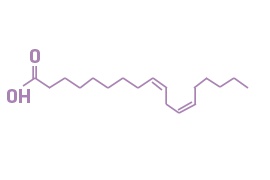
LA, omega-6 fatty acid, 18:2 cis-9, 12, Form of Vitamin F
Características
- INCI
- Linoleic Acid
- Ru.
- LA, omega-6 fatty acid, 18:2 cis-9, 12, Form of Vitamin F
- IUPAC
- 9,12-Octadecadienoic Acid (9Z, 12Z)-
- Funções
- antistatic, cleansing, emollient, hair conditioning, skin conditioning, surfactant
Para quem
Descrição
If your skin barrier had a favorite building block, linoleic acid would be very high on the guest list. This omega-6 polyunsaturated fatty acid is “essential,” which means your body cannot make it on its own and needs it from food or topical sources. Because it has two double bonds, it has a bendy, liquid-friendly structure that helps keep oils fluid rather than waxy. That’s also why linoleic-acid-rich plant oils such as sunflower and safflower oil tend to feel lighter on skin than more oleic-acid-heavy oils.
In your skin, linoleic acid is a real structural player. It is one of the most abundant fatty acids in the epidermis and helps build ceramides, the lipids that keep your barrier tight and water loss under control. When skin is low in linoleic acid, the barrier gets leaky and cranky — not ideal if your skin is dry, sensitive, or easily irritated. In one classic study, topical linoleic acid–rich sunflower oil repaired barrier function quickly, while olive oil, which is richer in oleic acid, did not have the same effect. That’s why linoleic-acid-rich formulas can be such a nice fit when you’re hunting for the best linoleic acid moisturizer or the best linoleic acid oils for skin.
There’s also good geekery here for acne-prone skin. Research has found that acne-affected skin tends to have lower linoleic acid levels and relatively more oleic acid. In a 4-week double-blind study, a 2.5% linoleic acid gel reduced microcomedones by about 25%, which is pretty neat because microcomedones are the tiny clogs that can turn into full-blown breakouts. Linoleic acid may also help with post-acne marks and uneven tone by supporting normal shedding of pigmented cells and by influencing melanin production. And if you’ve ever seen claims about the benefits of alpha linoleic acid, gamma linoleic acid, conjugated linoleic acid, or cis linoleic acid, it’s worth remembering that these are related but not identical fatty acids with their own quirks in the body — useful as nutrients, but not interchangeable with cosmetic linoleic acid.
Bottom line: linoleic acid is a smart, barrier-friendly ingredient that can help dry, irritated, and acne-prone skin look and behave better. It also turns up in many food sources of linoleic acid and linoleic acid foods, but for skincare you want it in a formula that keeps it stable and actually gets it onto your skin. If you’re scanning for the best linoleic acid for skin, look for plant oils and lightweight moisturizers that make this humble fatty acid the star rather than the sidekick.
Mais detalhes
O famoso ácidos gordos ómega-6, a mãe de todos os ácidos gordos do nosso corpo, os 6. É uma chamada poliinsaturados ácido graxo significa que tem mais de uma (Neste caso duas) ligações duplas e uma estrutura um tanto excêntrica que torna os óleos ricos em LA e LA um líquido fino.
É também um ácidos gordos essenciais ou seja, nosso corpo não pode sintetizá-lo e tem que retirá-lo dos alimentos. Isso não é nada difícil, pois muitas nozes (como sementes de linho, papoula ou gergelim) e óleos vegetais (como girassol ou cártamo) são ricos em LA. O difícil parece ser comer omega-3-s suficiente, mais especificamente comer uma proporção saudável de omega-6 para omega-3, mas esse é um tópico para um local que é bom para comer e não para nós.
Quanto a ácido linoleico e pele, LA é um rapaz realmente importante encontrado naturalmente em nossa pele. É o ácidos gordos mais abundantes na epiderme e serve como precursor estrutural de importantes lípidos cutâneos chamados ceramidas. Sabendo disso, não será uma surpresa que o ácido linoleico tenha um papel central na a estrutura e função da permeabilidade do estrato córneo, aka barreira cutânea saudável. A deficiência de LA leva a uma barreira cutânea mais permeável prejudicada e a aplicação tópica de óleo de girassol rico em LA pode corrigir este problema rapidamente (enquanto o azeite rico em oleico não teve o mesmo efeito de reparação de barreiras).
LA não é apenas importante para tipos de pele seca e danificada por barreira, mas também para propensa a acnepele. A investigação mostra que a pele problemática tem níveis mais baixos de ácido linoleico (e níveis mais elevados de ácido oleico) do que a pele normal. Portanto, a deficiência de LA na pele parece estar ligada não apenas a uma barreira cutânea prejudicada, mas também a acne e manchas de LA em todo o rosto podem ajudar com o seu problema de pele. Um estudo duplo-cego usando um gel de LA a 2,5% durante 4 semanas encontrou uma redução de 25% no tamanho dos microcomedões, os minúsculos poros bloqueados que podem posteriormente levar à acne.
Se isso não bastasse, temos mais uma coisa a relatar sobre LA. É clareia a hiperpigmentação (aka UVB causou manchas solares) tanto bloqueando a produção de melanina dos melanócitos (as células da pele que fazem o pigmento melanina) como aumentando a descamação do pigmento melanina das camadas superiores da pele.
Global, o ácido linoleic é um goodie multi-funcional da pele com barreira que repara, acne-Reduzindo, e pele-clareando capacidades mágicas. É um bom ponto na lista de ingredientes praticamente para qualquer tipo de pele.
Perguntas frequentes sobre Linoleic Acid
O que o ácido linoleico faz nos cuidados com a pele?
O ácido linoleico é bom para peles secas ou sensíveis?
O ácido linoleico pode ajudar na pele com tendência a acne?
O ácido linoleico é o mesmo que o ácido linolénico?
Que tipos de produtos para a pele contêm normalmente ácido linoleico?
Evidências e pesquisas sobre Linoleic Acid
-
1
McCusker, Meagen M., and Jane M. Grant-Kels. "Healing fats of the skin: the structural and immunologic roles of the ω-6 and ω-3 fatty acids." Clinics in Dermatology 28.4 (2010): 440-451.Encontre em PubMed
-
2
Prottey, C., et al. "The repair of impaired epidermal barrier function in rats by the cutaneous application of linoleic acid." British Journal of Dermatology 94.1 (1976): 13-21.Encontre em PubMed
-
3
Downing, Donald T., et al. "Essential fatty acids and acne." Journal of the American Academy of Dermatology 14.2 (1986): 221-225.Encontre em PubMed
-
4
Letawe, C., M. Boone, and G. E. Pierard. "Digital image analysis of the effect of topically applied linoleic acid on acne microcomedones." Clinical and experimental dermatology 23.2 (1998): 56-58.Encontre em PubMed
-
5
Elias, Peter M., Barbara E. Brown, and Vincent A. Ziboh. "The permeability barrier in essential fatty acid deficiency: evidence for a direct role for linoleic acid in barrier function." Journal of Investigative Dermatology 74.4 (1980): 230-233.Encontre em PubMed
-
6
Ando, Hideya, et al. "Linoleic acid and α-linolenic acid lightens ultraviolet-induced hyperpigmentation of the skin." Archives of dermatological research 290.7 (1998): 375-381.Encontre em PubMed
Produtos com Linoleic Acid (2 385 total)
Mais frequente em produtos Clinique (50 itens)


