Xanthan Gum
Characteristics
- INCI
- Xanthan Gum
- CAS
-
11138-66-2
This is the substance number in the Chemical Abstracts Service registry. The CAS number uniquely identifies a substance regardless of language, trade name, or synonyms.
- EC
-
234-394-2
This is the substance number in the European chemical identification system (EC number), used in European regulatory databases including ECHA/CosIng.
- Functions
- binding, emulsifying, emulsion stabilising, gel forming, skin conditioning, surfactant, viscosity controlling
Who it's for
Description
If you have ever wondered why a lotion, gel, or shampoo feels smooth instead of watery and sad, xanthan gum is often one of the tiny behind-the-scenes heroes. It is a polysaccharide made by fermentation of sugars, and in cosmetics it works mainly as a thickener, texture enhancer, and emulsion stabilizer. That means it helps oil-and-water mixtures stay mixed and gives formulas a more pleasant, cushiony feel. In skincare, the practical benefits of xanthan gum are pretty simple: it can make a product easier to spread, less drippy, and a bit more elegant on your face. Typical use levels are usually 0.1-0.5%, and even at these small amounts it can make a noticeable difference.
For your skin, xanthan gum is mostly a texture ingredient rather than a superstar active, but that does not make it unimportant. A well-thickened serum or cream is often easier to apply evenly, which can improve the overall user experience and reduce that annoying “slip off the fingers” feeling. It is also generally considered gentle and compatible with many formulas, which is why it pops up in all sorts of products. The data on direct skin benefits is limited because it is not really there to treat skin, but its formulation benefits in skincare are real: better stability, better spreadability, and a nicer finish. If you are hunting for the best xanthan gum for skincare, the answer is usually the one that is clean, cosmetic-grade, and used in the right percentage for the formula, not some magical “best brand” from a random forum thread.
Xanthan gum is also popular outside skincare, so you will see people asking how to use xanthan gum as a thickener in cooking, how to use xanthan gum in baking, ice cream, gravy, or a Ninja Creami recipe. In food, it helps mimic the texture of gluten and can improve body and stability, especially in gluten-free recipes. The same basic gelling talent is why it works so well in cosmetics. For hair products, the benefits of xanthan gum for hair are mostly about making shampoos and conditioners more stable and easier to spread through your strands; it can also help formulas feel less watery. If you want a xanthan gum substitute, formulators often turn to other gums or cellulose-based thickeners, but each one behaves differently, so “best” depends on the product. In other words, xanthan gum is not glamorous, but it is a very useful little workhorse.
One small practical note: xanthan gum is used in very different ways depending on the formula, so “how to use xanthan gum powder” at home is not the same as how cosmetic chemists use it. In cosmetics, it is usually pre-dispersed and hydrated carefully to avoid clumps; in food, people often whisk it into liquids gradually. So yes, the internet may argue endlessly about the best xanthan gum brand, the best xanthan gum for baking, or the best xanthan gum for ice cream, but for skin care the real question is whether the finished formula is stable and pleasant. Also, despite the name, it does not have impressive health benefits on its own when applied to skin, because it is mainly there to improve the formula rather than act as an active ingredient. Still, that humble job is exactly why you find it in so many products that feel a whole lot better than they would without it.
More detail
It's one of the most commonly used thickeners and emulsion stabilizers. If the product is too runny, a little xanthan gum will make it more gel-like. Used alone, it can make the formula sticky and it is a good team player so it is usually combined with other thickeners and so-called rheology modifiers (helper ingredients that adjust the flow and thus the feel of the formula). The typical use level of Xantha Gum is below 1%, it is usually in the 0.1-0.5% range.
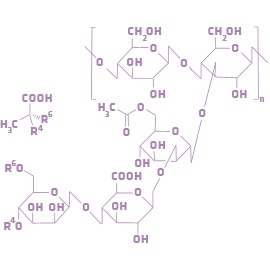
Btw, Xanthan gum is all natural, a chain of sugar molecules (polysaccharide) produced from individual sugar molecules (glucose and sucrose) via fermentation. It’s approved by Ecocert and also used in the food industry (E415).
Frequently Asked Questions about Xanthan Gum
What does xanthan gum do in skincare products?
Is xanthan gum good for skin?
Does xanthan gum have any benefits for the face?
Can xanthan gum be used in hair products?
Are there any health concerns with xanthan gum in cosmetics?
Products with Xanthan Gum (47 458 total)
Most often found in Nivea products (248 items)


